
Nestled in the southern foothills of Mount Gede in West Java, Sukabumi is a small hill station with a cooler climate than the lowlands around it. About 100 km south of Jakarta, it remains somewhat detached from the capital’s sprawl. Sunken Majlis sits in a quieter part of the city, in a remote village where suburban slums spread across open land—land yet to be shaped by urban planing.
The design was shaped by the site’s unique conditions. Aware of its distinct character, the design team approached the project with caution and careful attention. Though the community was growing, there was already a strong tradition embedded within it. Sunken Majlis was envisioned as both a community and faith project.
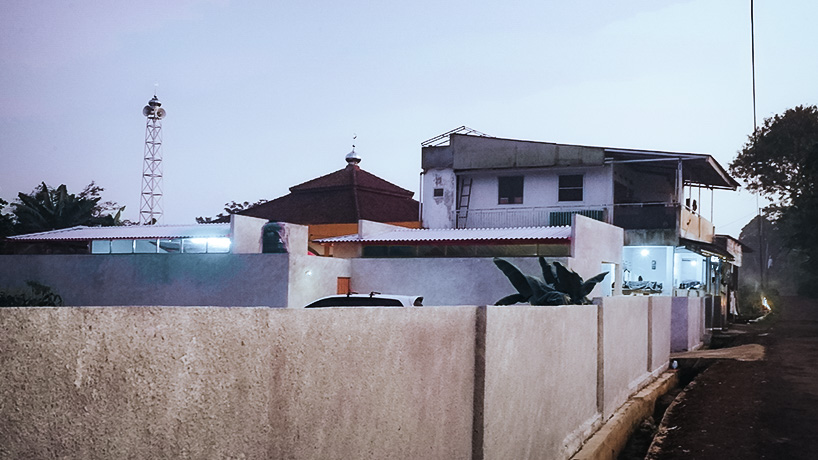
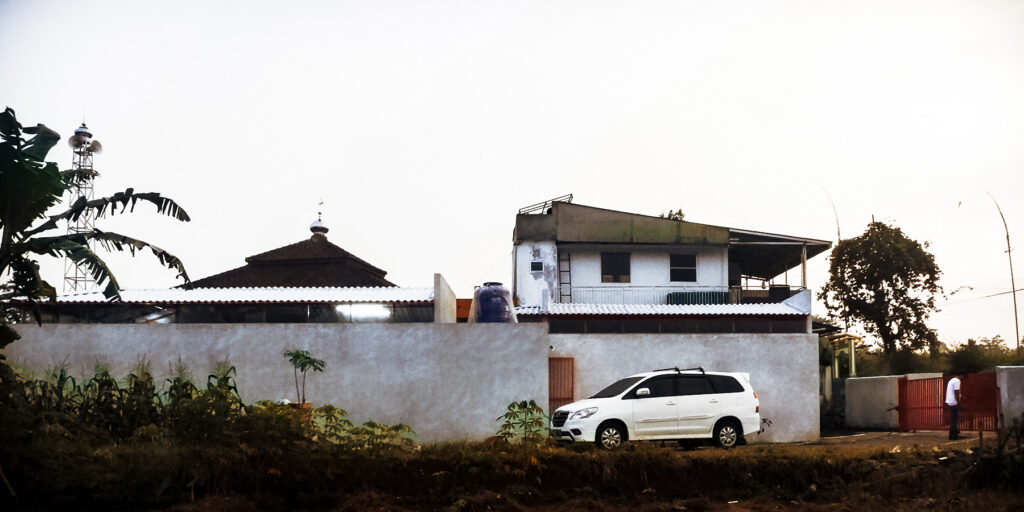
Right beside the site stood an old mosque, long established as the heart of the community. Over time, it had faded from view, hidden behind a house that had grown taller with each expansion. From the main road, it was almost invisible, but as one approached, it emerged—bearing and dignified behind the house.
The site for Sunken Majlis was already slightly lower than the mosque, but a typical structure here would have made the mosque feel obstructed, disrupting its presence. Instead, the majlis was kept as low and as humble as possible—its proportions subdued, its presence quiet—so that rather than competing with the mosque, it allowed its majesty to remain undisturbed.
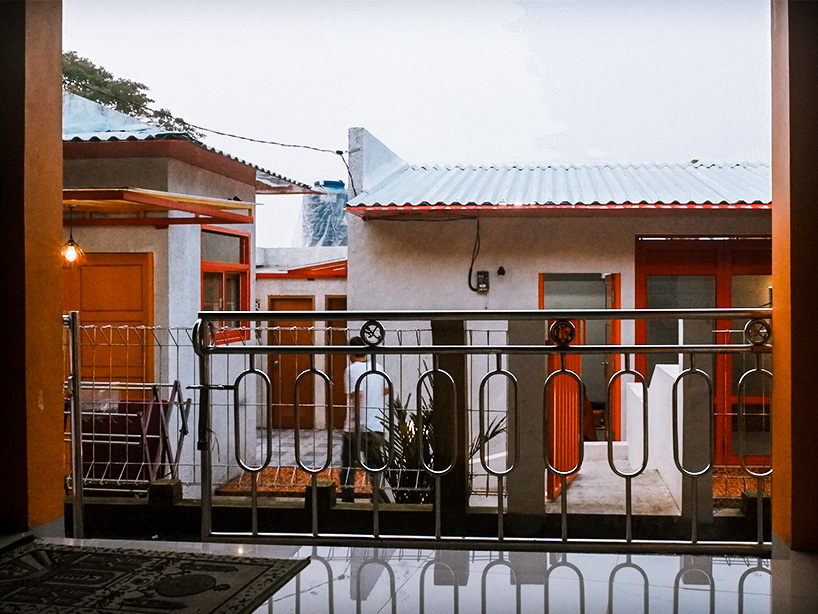
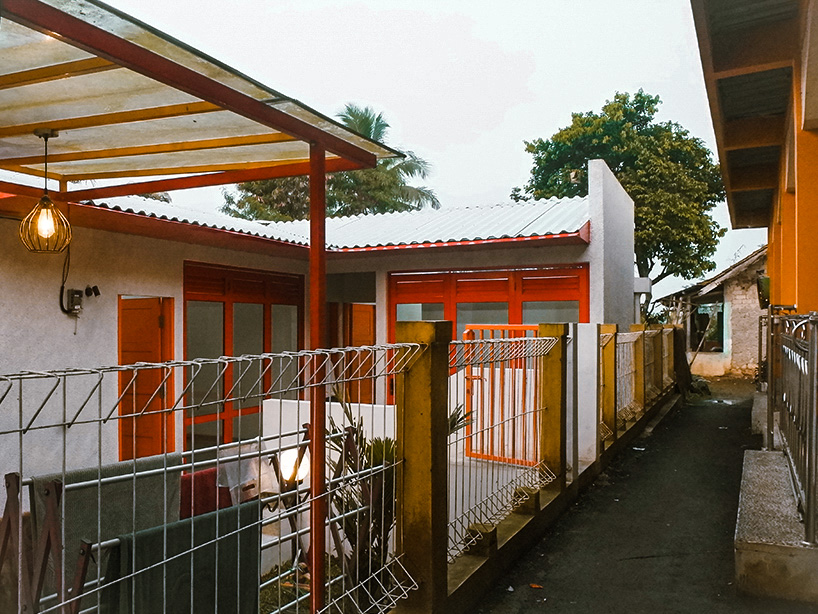
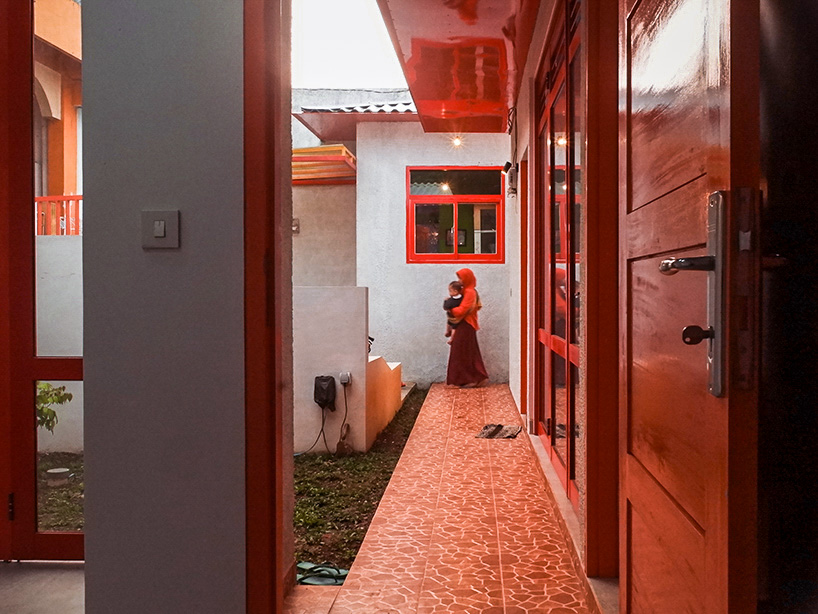
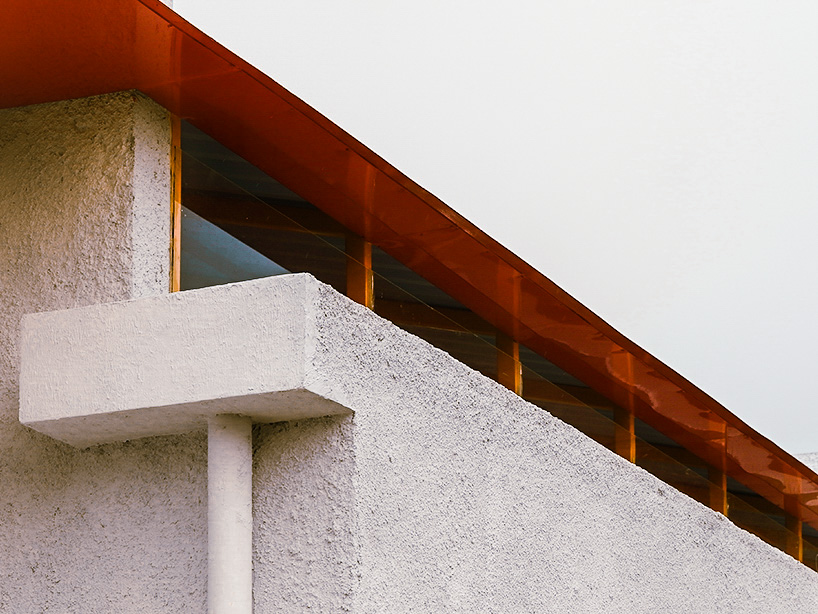
How did it come together? Well, the design kept things simple—just an arrangement of two windowless cubic volumes, softened by a long clerestory forming a single line beneath the eaves. On the other side, its doors open wide toward the mosque gate, with only a narrow path—around a metre wide—separating them.
Majlis is an Arabic term meaning ‘sitting room,’ often used to describe special gatherings, whether social or religious, in Islamic culture. The hope was that the narrow passageway would bring the established community closer to the new structure—guiding them along the same path, whether heading to the mosque or the majlis.
The Sunken Majlis is led by an ustadz—a term of Persian origin, used in Indonesia as an honorific for an Islamic faith teacher. He was brought in from a nearby village, hired by the project’s owners to foster the space with knowledge and guidance.
It’s not like building a house for private clients, where the property stands on its own and has its own rights, is it? This is a community and faith project—but with particular challenge. The clients choose to bring in an ustadz from outside the established community, from another village entirely, to run the majlis. That meant a new connection had to be forged—something that could bridge those worlds and bring them together.
So, the strong contextual approach didn’t just shape the design—it carried through the construction process and continues even now, as the structure stands and serves its purpose.
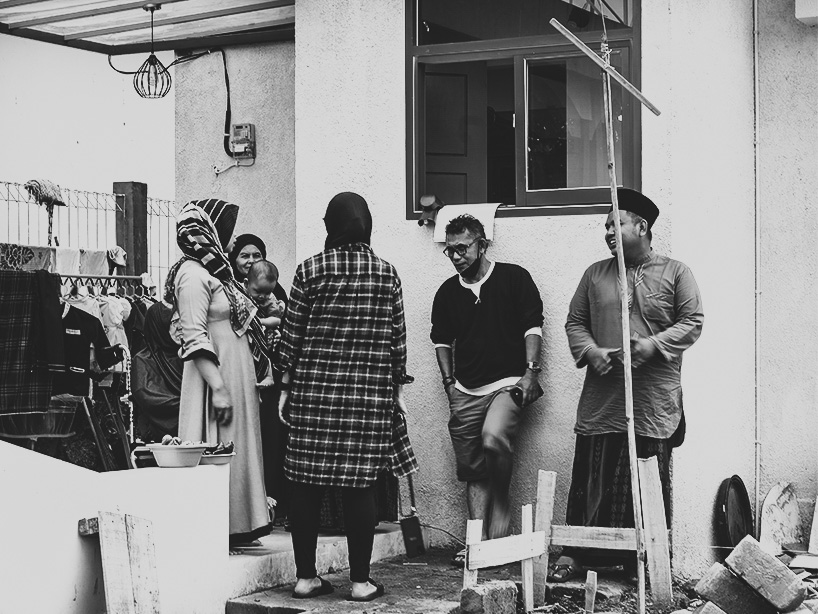
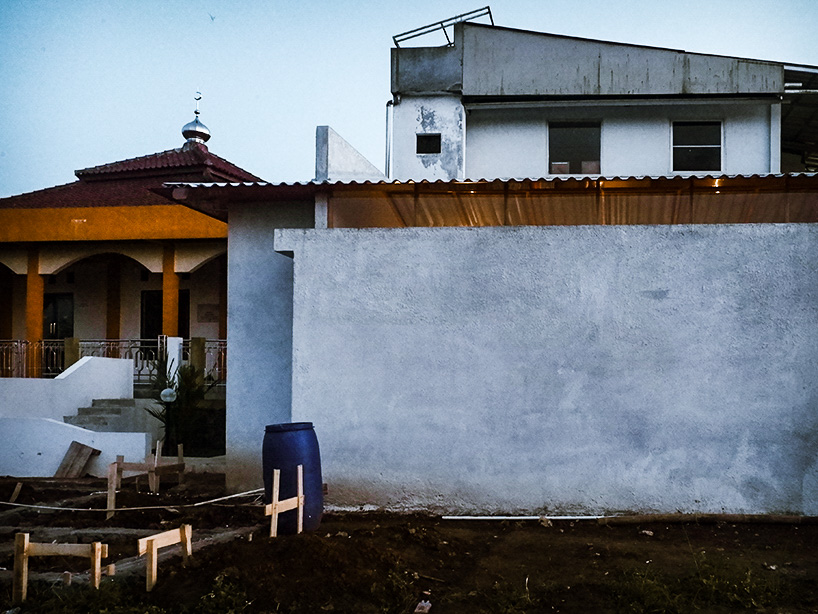
As part of the approach, the Sunken Majlis was built by local hands. Ojak, who runs a home-shop just across the street, took the lead among the builders. Working under him was Abah, the father of the ustadz who would later run the majlis. The rest of the workers came from the neighbouring slums, drawn in from the community around the site. Everything was done on site, with the construction managed by a contractor chosen by the project’s owners.
The building itself is made up of two separate volumes, brought together as a single whole. One, about 35 square metres, serves as a dwelling for the ustadz—what they later called the Sunken Dwelling. The other, around 100 square metres, was designed as a space for teaching children and young people about Islam. The dwelling came first. Only once the ustadz had moved in and settled into the community did the construction of the majlis begin—a response not just to the physical site, but to the social fabric around it.
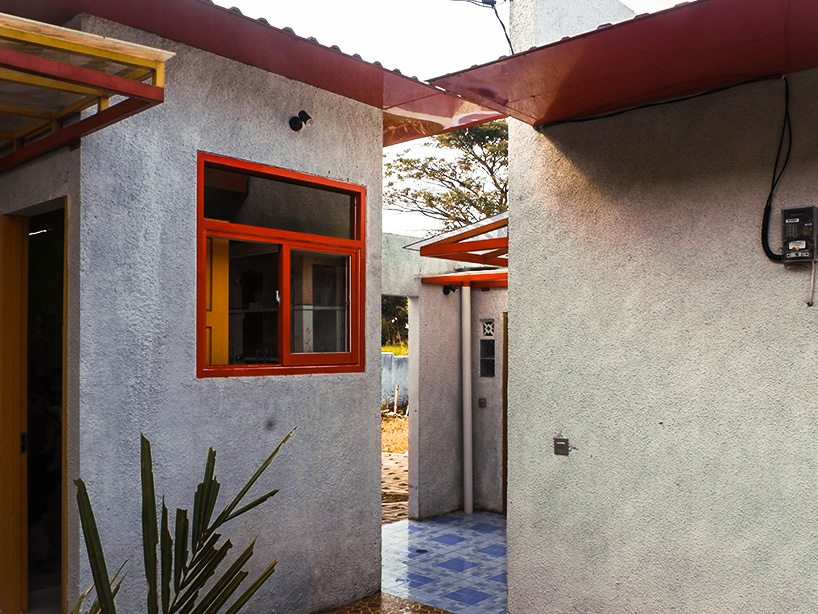
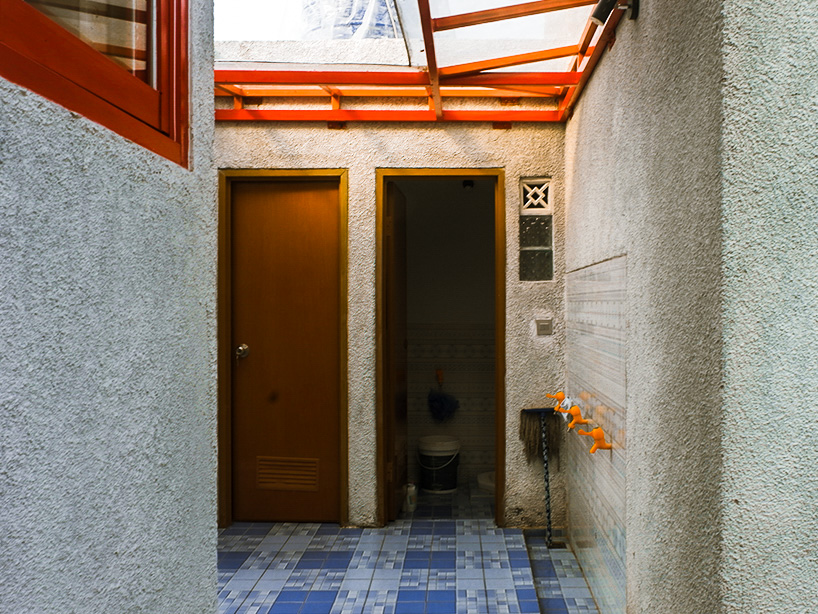
The structure was built primarily using AAC (Autoclaved Aerated Concrete) bricks, finished with a rough cement plaster. This texture was intentional—helping the building blend naturally into the surroundings. Though a single asphalt road cuts through the village, most paths are still dirt tracks, just untreated clay underfoot. Painting the building white also gave it a neutral presence, setting it quietly among the neighbouring slums.
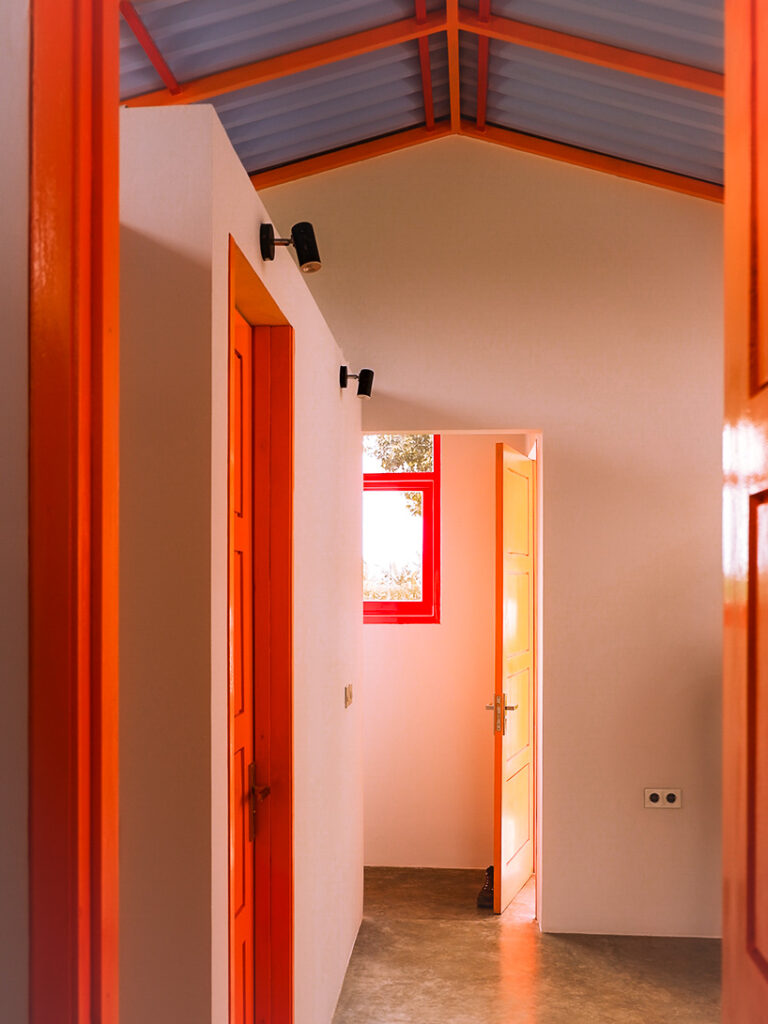
The roof is made of corrugated UPVC sheets. With its double-layered panels and air cavities, it offers natural insulation—keeping the space cool under the hard sun and muffling the roar of heavy rain. No artificial ceiling was needed, which not only kept the interior honest to its structure but also cut construction cost by eliminating extra materials and support frameworks.
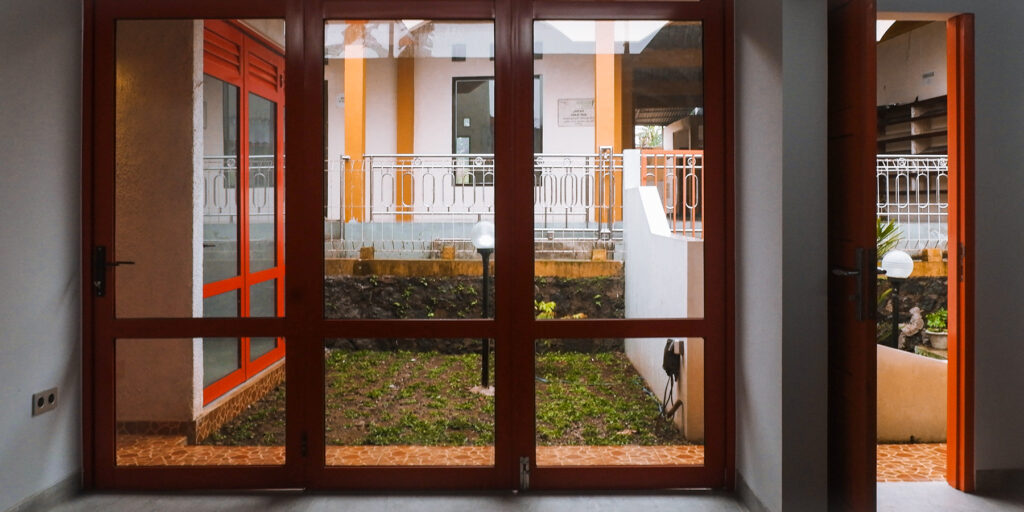
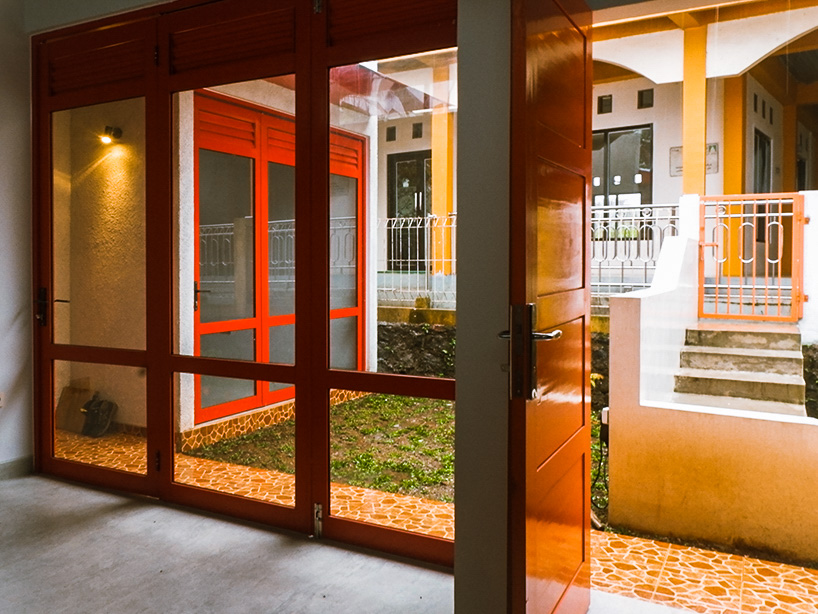
To honour the existing symbol of the community, the design took a simple rectangular plan and carved out a section along the side that runs parallel to the mosque—creating a sunken garden in its place. In a way, what was removed from the new structure became an addition to the old one, giving the mosque a touch of greenery it never had before. Just one of the ways the design tried to bridge the gap between past and present.
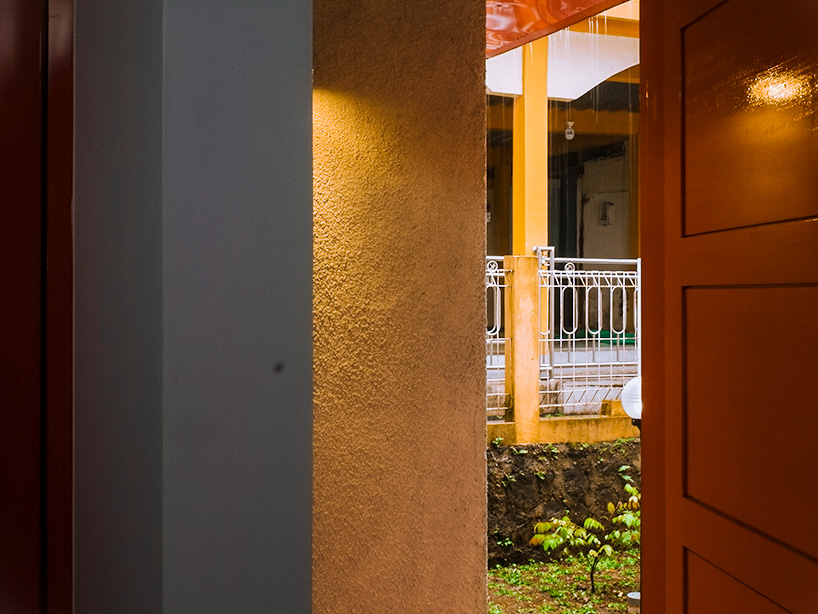
The colour scheme was another way to tie the new structure to the mosque. A red accent runs along the eaves’ soffit, highlights certain openings, and marks the exposed iron roof structure—echoing the warm tones of the existing mosque, which is painted in pale yellow and orange. The palette chosen for the new structure simply extended the gradation, letting the two buildings feel like part of the same visual story.
All standing, vertical elements—steel structural posts beneath the eaves and all wooden doors—are painted in orange. Some are painted the same orange as the mosque’s piers, while others take on a deeper, reddish-orange, reinforcing the colour continuity. Unlike standard wooden doors, these have no upper jamb—just two side jambs to hold the door leaf and lockset. Another small but intentional choice to cut down on materials and keep costs low.
Convincing the clients wasn’t easy. At first, they expected. a straightforward layout—just another building with its frontage facing the main road, like any other. But the architects posed a simple question, ‘where should the arse be—towards the road, or towards the mosque?’ In Indonesia, it’s common to call the rear side of the building with ‘arse’ as for the term, instead of back. And the thought of turning their faith space’s arse to the mosque? Well, that didn’t sit right. That flipped the conversation entirely. And just like that, the decision made itself. They agreed—the structure turned its face towards the mosque instead, reinforcing its role as place of faith and learning. And now, not just the locals, but people from nearby villages, come there to learn.
Did the architecture work? Who knows—post occupancy study always going on as we strives ‘research through design.’ Stay brilliant! Cheers.

Sunken Majlis is a community and faith project set deep in rural Sukabumi, West Java. It was designed not just as a place for Islamic teaching but as a bridge—between old and new, between the local community and an ustadz brought in from outside. Yet, with an existing mosque already central to village life, the arrival of a new religious space carried its own tensions. Faith and tradition run deep here, and architecture had to do more than just build walls; it had to soften boundaries, foster connection, and earn its place in a landscape where belief is not just taught, but lived.
Project Credits
(2021-2022)
Architects: MADs+Partner—Alhamdamar Mudafiq, design principal; Bangkit Mandela, design team.
Photo & Narration: Alhamdamar Mudafiq